
Case Study
Creating WhoNoPay: a reputation system that tracks how companies really pay
2X
Brands with higher payment trust scores saw 2.1× faster deal closures
We created whonopay to solve a problem we faced ourselves working with clients who delayed or dodged payments, with no way to see it coming. The idea was simple but ambitious: build a platform where anyone could search a company and see how they pay. Turning that idea into a scalable, trusted experience meant designing for verification, anonymity, and credibility all at once. The result is WhoNoPay: a reputation system that brings transparency to B2B payments, before the transaction begins.
The Process
With a problem as universal and as sensitive as payment behavior, we knew the platform had to earn trust from the first click. We approached the build with a sprint-based mindset: fast feedback loops, tight design-dev integration, and a relentless focus on credibility. Every decision was anchored in one goal: give vendors and service providers the power to assess trust before entering a deal.
Key Highlights:
- •Sprint based execution to parallelize UX, API integration, and backend development
- •Wireframes and prototypes focused on clarity, search-first interaction, and ease of review submission
- •Real time company data via GSTN and MCA APIs
- •Company claim workflows for ownership, response, and reputation management
- •Moderation and spam protection to ensure review integrity
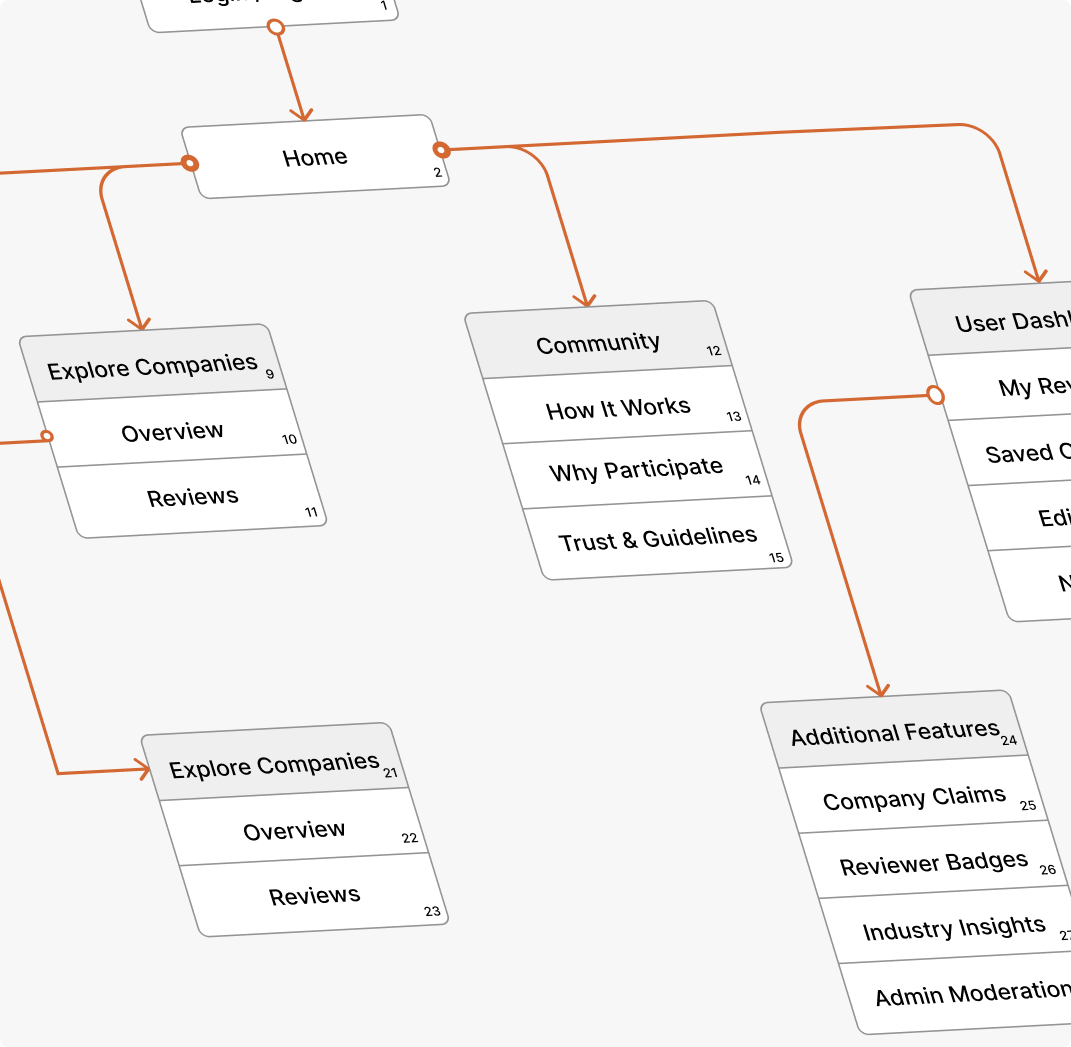
A logical flow, built for search-first simplicity
The foundation of WhoNoPay’s experience is search. Everything else-reviewing, verifying, deciding-branches from that one action. So we structured the platform around three core flows: finding a business, understanding its payment behavior, and contributing your own experience.
Each page was designed to do one job exceptionally well. Profiles surface verified company data and contextual reviews. Review flows guide users with minimal friction. The layout stays focused, intuitive, and decision-ready-whether you’re browsing on mobile or reviewing a client mid-meeting. By simplifying navigation and prioritizing clarity, we made it easy for users to move from curiosity to confidence.
Journey mapping
We mapped the emotional flow of a typical WhoNoPay user from first landing on the platform to confidently deciding whether to work with a company. For most vendors, timing is critical-they need quick answers before sending a proposal or starting a project.
The product journey was structured to support that urgency: fast search, clear context, and safe review contribution. Each step was broken into intentional decision points, making the flow intuitive, reassuring, and built for trust.

A trust centered visual language, built for simplicity and speed
The WhoNoPay design system was crafted to build credibility at every touchpoint. We used a muted, trust-first palette-deep navy for stability, grey for neutrality, and green for verified actions. Typography is set in a clean, neo-grotesque sans-serif for strong readability across devices, with bold weights guiding focus and hierarchy.
Layouts are modular and card-based, optimized for mobile-first use cases. Microinteractions offer subtle feedback, while generous spacing and sharp contrast keep users focused on decisions, not distractions. Every UI element reinforces our core product promise: fast, clear insight into a company’s payment behavior.

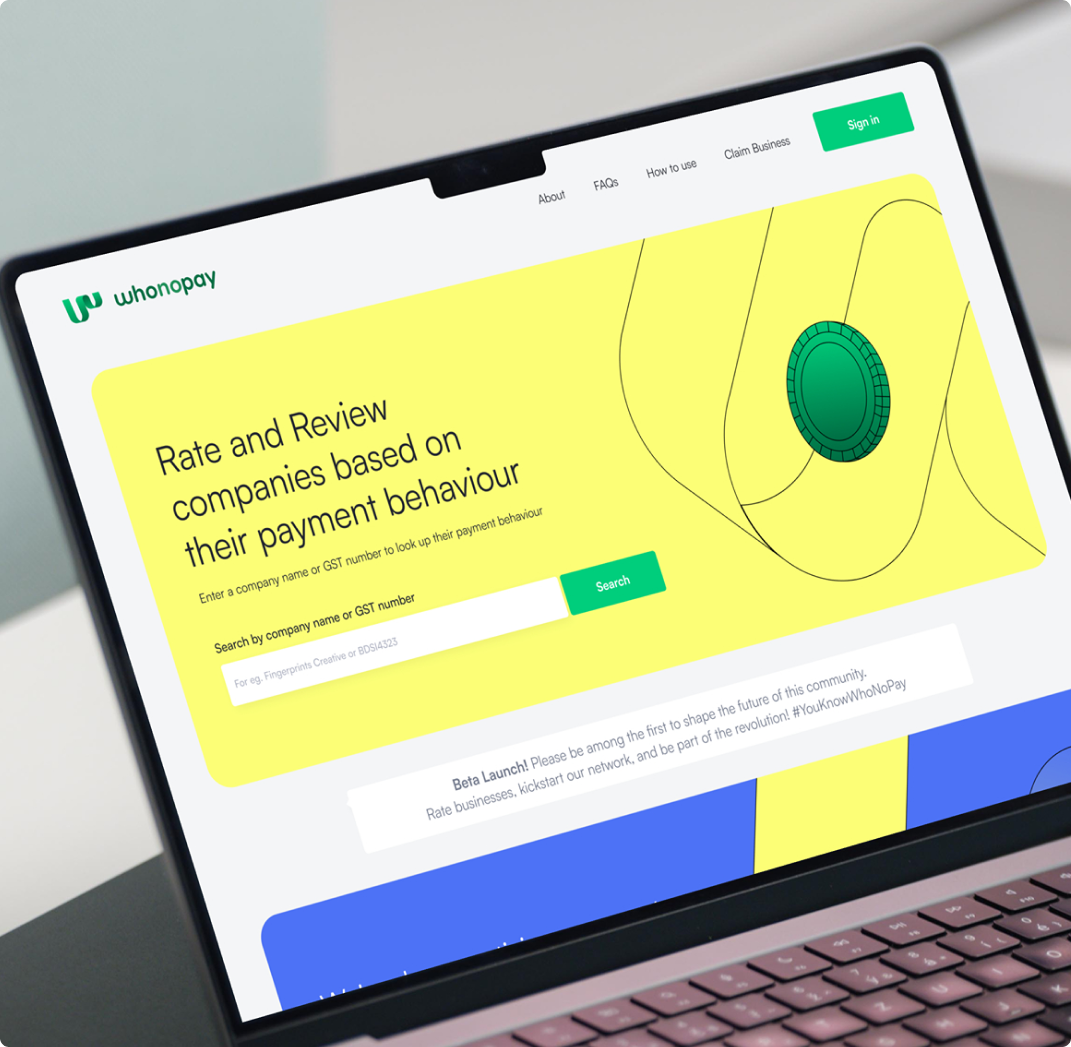
Instant access to verified company profiles
At the heart of WhoNoPay is a powerful search engine that lets users look up any business using a GST number or company name. Behind the scenes, we connect directly to government APIs (GSTN and MCA) to pull verified business data legal name, registration status, location instantly and accurately.
We designed the search flow to support real-world urgency. Smart suggestions, typo tolerance, and clean profile layouts ensure that even partial inputs return the right results. Whether on desktop or mobile, users can quickly find the business they’re vetting-and decide with confidence before moving forward.
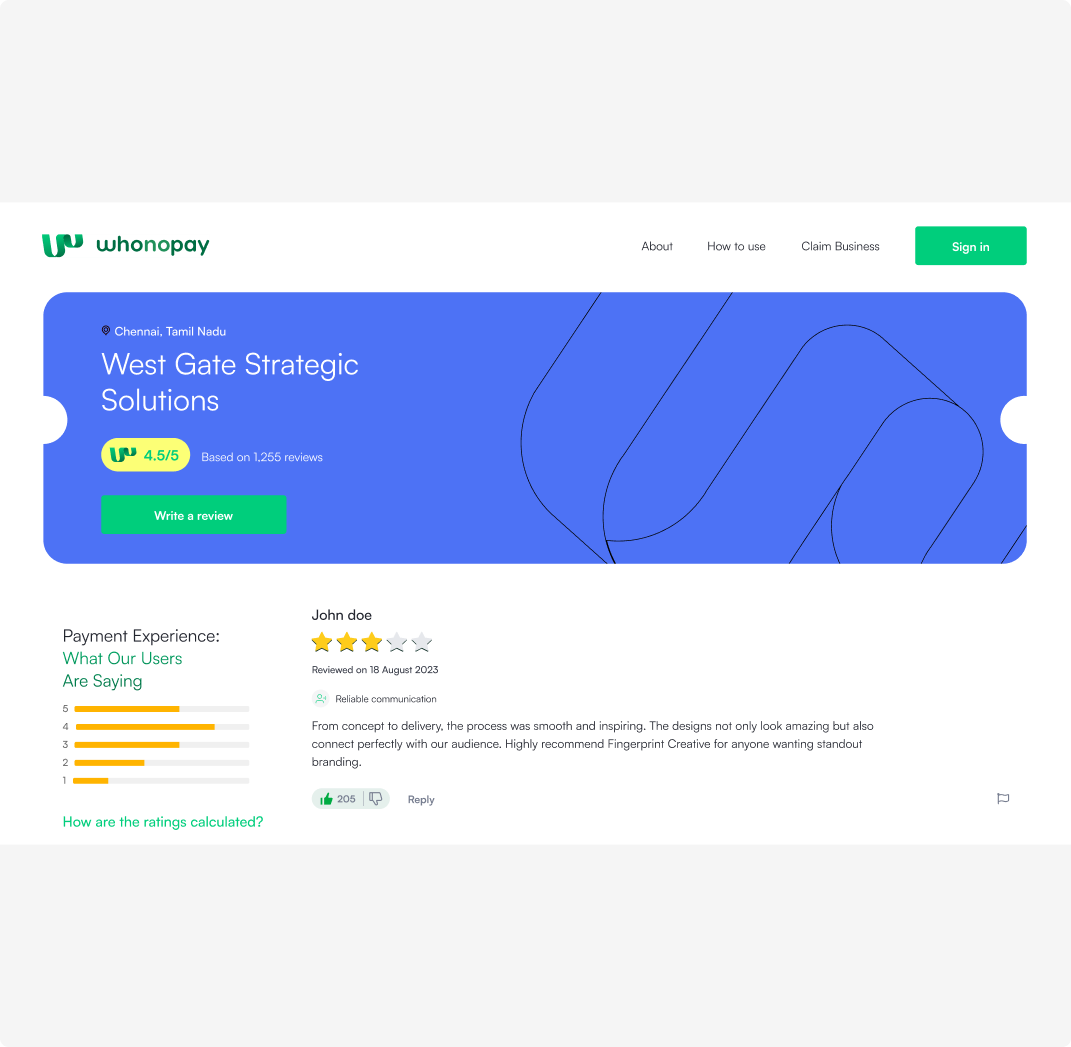
A transparent score that summarizes payment behavior
Every company on WhoNoPay is assigned a WhoNoPay Rating, a collective score generated from all verified reviews. It distills multiple experiences into one easy to understand metric, giving users a quick snapshot of how reliably a company pays without needing to scroll through every review.
This score is dynamically updated as new reviews come in, reflecting trends over time. While detailed reviews provide valuable context, the rating helps people working with companies make faster, more informed decisions-especially when time is tight or stakes are high.

Give honest feedback anonymously if you need to
WhoNoPay makes it easy for anyone to rate a company’s payment behavior in just a few clicks. The review form is structured, focused, and designed to capture what matters most timeliness, clarity, and overall experience.
Users can choose to post their feedback anonymously, with backend verification ensuring authenticity. This protects identities while maintaining credibility, allowing more people to share honest insights without fear of backlash. It’s transparency on your terms.

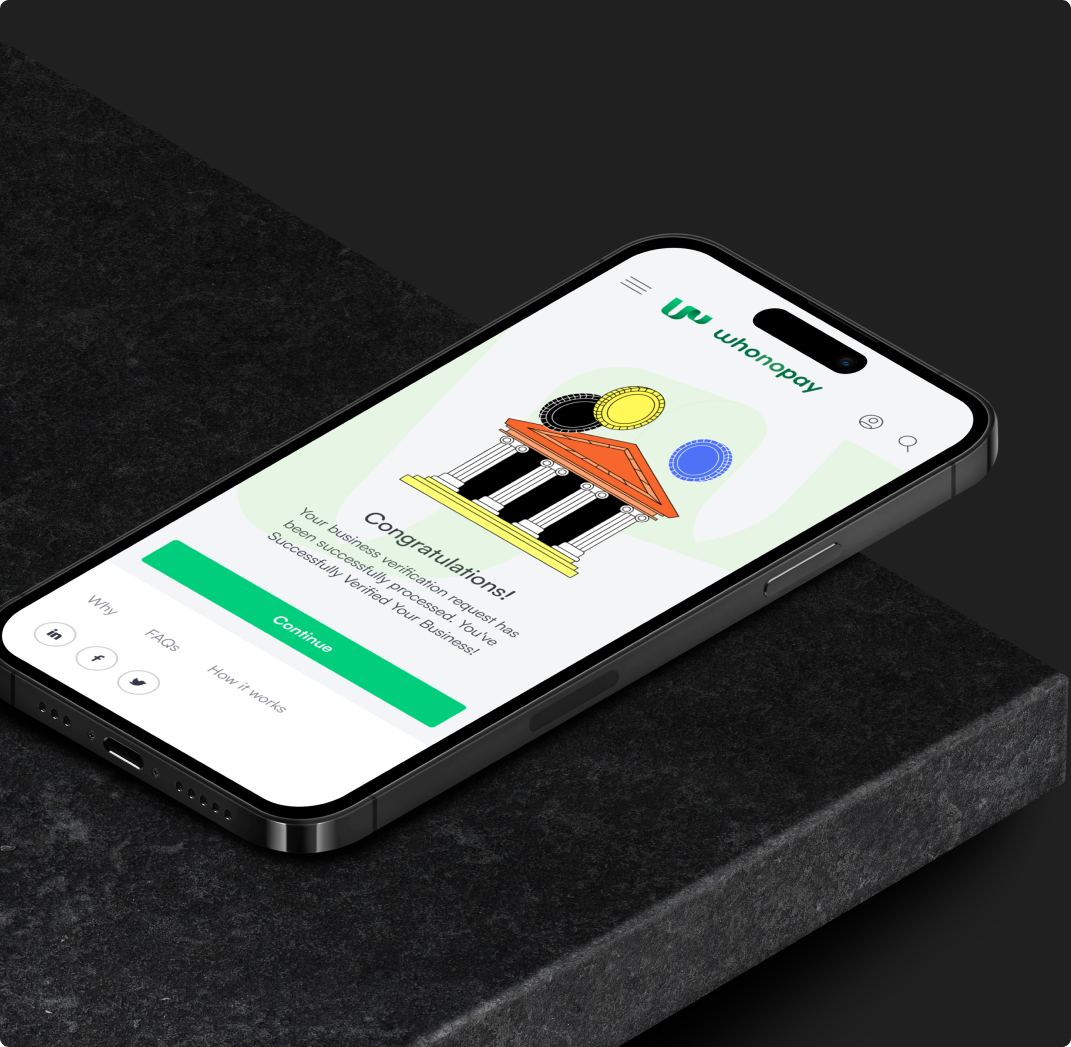
Claim your profile and build a transparent reputation
Companies listed on WhoNoPay can claim their profiles by verifying their identity through official business credentials. Once verified, they gain access to tools that allow them to respond to reviews, add context, and actively manage their public reputation.
This two-sided system ensures fairness allowing those being reviewed to share their side of the story. Verified companies are marked with a trust badge, signaling legitimacy and accountability to anyone checking their profile. It’s a step toward more open, honest business relationships.
Shaping smarter decisions before the deal even begins
Since launch, WhoNoPay has quickly become a trusted reference point for individuals and teams working with new companies. Thousands of businesses have been searched, reviewed, and rated turning once hidden payment behavior into visible, verified insight.
The platform is already influencing decision making across industries. Users are walking into engagements more informed, companies are becoming more mindful of their reputation, and transparent payment practices are gaining visibility. With every search and review, the ecosystem gets stronger and trust becomes the new default.

The Results
Users actively search thousands of companies to check payment histories before engaging in business.
The community shares real, verified experiences to promote payment accountability.
Businesses claim and manage their profiles to build trust and respond to reviews.
The platform saw rapid adoption, doubling its user base in just the first month.
Users actively search thousands of companies to check payment histories before engaging in business.
The community shares real, verified experiences to promote payment accountability.
Businesses claim and manage their profiles to build trust and respond to reviews.
The platform saw rapid adoption, doubling its user base in just the first month.